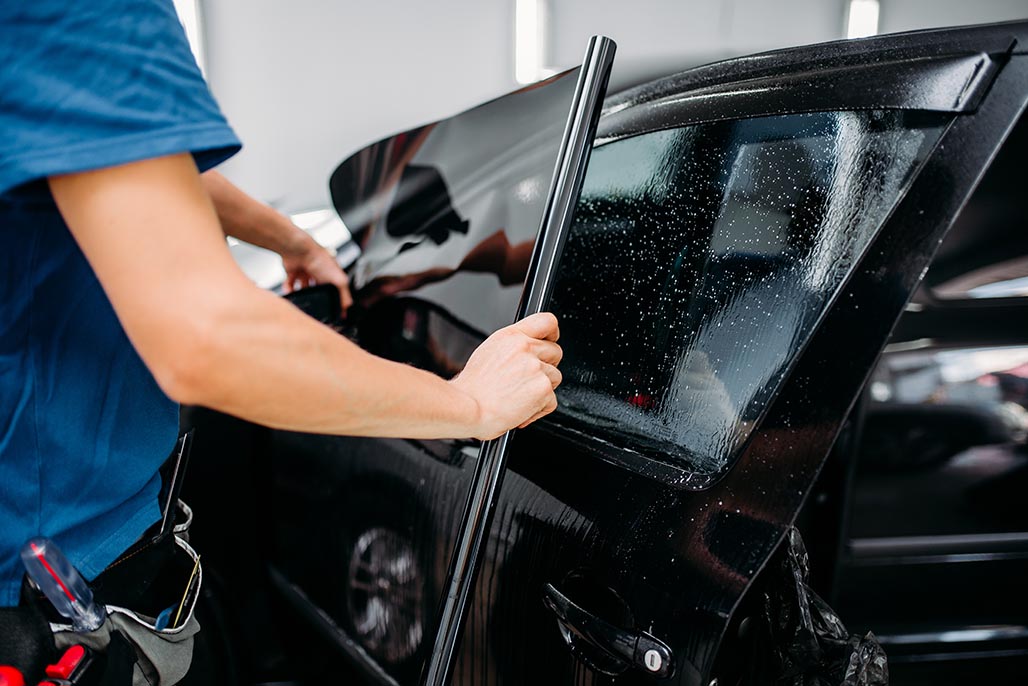
While all tints aim to promote privacy while still allowing plenty of light and visibility inside, the darkness of tints still vary based on the level or percentage. Film percentages stand for light transmission, or the amount of light that is allowed through the film. The lower the percentage, the darker the film. So a 100% tinted window would have no tint, completely free from car window tinting. A 5% tint would be what we usually call limo tint, which can be the darkest in some regions, depending on what they offer.
This is because the percentage is actually referring to visible light transmission, or VLT, it becomes a little easier to understand. The VLT is the percentage of visible light the tint allows to pass from the exterior of the window to the interior of the vehicle, which means that a 5% VLT means that only 5% of exterior light is allowed to pass through the glaze, which is why it’s so dark. In contrast, a 60% VLT means that the tint blocks 40% of visible light transmission (and allows 60% through).
Moreover, there are also different types of tints which may affect the darkness or percentage level of the films:
- Visible Light Transmission (VLT): The percent of overall noticeable light that is sent via the window film/glass system. The lower the number the much less visible light sent.
- Infrared Rejection (IR): Infrared light type the sun is only a section of the solar range which gives warmth with a window.
- Ultraviolet Rejection (UV): Indicates the quantity of ultraviolet (UV) energy that is blocked from travelling through the glass. Removing UV light can minimize the rate of deterioration.
- Complete Solar Energy Rejected (TSER): The percent of complete solar energy (warmth) rejected by the window film/glass system. The greater the number, the much more complete solar energy (warmth) turned down.
- Visible Light Reflectance (VLR): The percent of total visible light that is reflected by the window film/glass system. The lower the number the less visible light reflected.
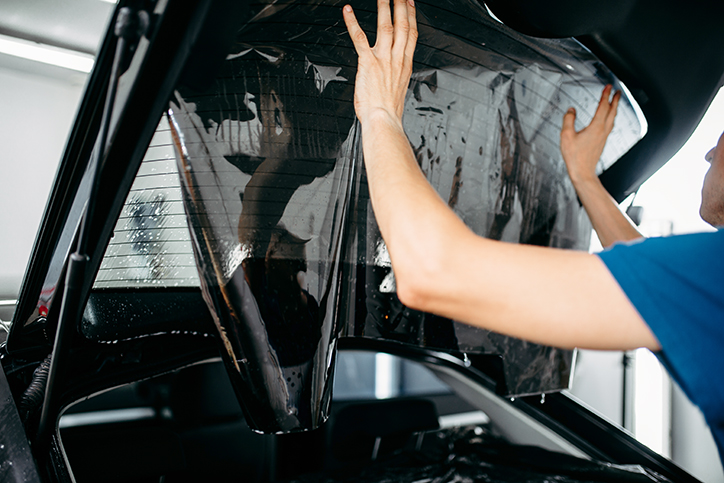
While the darkness of the tints can depend on your taste and style or preference, choosing your car window tint darkness is mainly about following the law. Every state has different legislation regarding tint darkness and reflection and you always want to avoid getting fined because you used tint which was too dark. That being said, most states also allow up to 50% darkness, but for most people it’s hard to figure out exactly how much that is. As we mentioned throughout our site, window tint darkness is measured by the percent of light that passes through your windows (VLT).
In the United Kingdom, the percentage of tint on vehicles is very closely monitored because of all the potential damages offenders can get involved in.
The law rules that front windscreens and front side windows depend on when the vehicle was first used. If the vehicle was first used on April 1, 1985, then the required percentage of the darkness of the tint should be at least 75% of light through and the front side windows must let at least 70% of light through. For cars that are first used before April 1, 1985, the front windscreen and front side windows must both let at least 70% of light through.
Car window tint will shield your eyes and prevent glare from all sources of extreme and blinding light. More over, direct exposure from sunlight and associated UV rays can be harmful to our health. It can potentially cause skin cancer when exposed over a prolonged period of time. Car tinting blocks 90% or more of harmful UV rays while also significantly reducing heat. By installing it to your windows, you prevent your car’s interior from deteriorating on a much faster pace.
When it comes down to choosing which tint film percentage to get, it’s always better to go for quality over cost. Many people assume that the pigmentation is similar, and will often get the most inexpensive one to save cost. However, a low quality tint has a tendency to fade, fracture, bubble, peel off or turn purple. Plus, cheaper tints tend not to have heat rejection technology built in.
SOURCES:
- http://cars.lovetoknow.com/about-cars/types-auto-window-tinting
- https://www.gov.uk/tinted-vehicle-window-rules