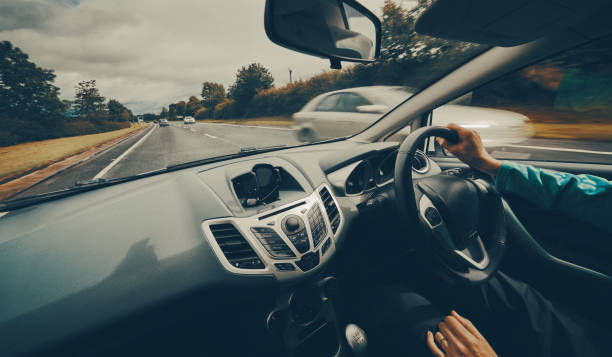
Many people mistakenly believe that being inside a car automatically shields them from the sun’s ultraviolet (UV) rays, particularly on cloudy summer days. In reality, this assumption is false, especially when car windows are untinted. Untreated glass windows allow a significant amount of UV radiation to penetrate, putting your skin at risk for sunburn and damaging your car’s surface.
Understanding how UV exposure works inside your vehicle and why it remains a big concern, even during cloudy summer days, can help you make safer choices throughout the year.
Clouds Do Not Block All UV Rays
Cloudy days may feel less hot, but UV rays can still penetrate through the clouds. This means that even if the sun is not shining directly, UV radiation can still reach your vehicle’s surface. While you may not feel the heat as strongly, your skin may still be at risk for damage, leading to premature ageing and risk for skin cancer.
How UV Rays Can Damage Your Car
UV rays are a form of solar energy that can degrade automotive materials over time. When UV rays hit your car’s surface, they pass through the clear coat and paint layers, breaking molecular bonds in car paint pigments and plastics. It triggers photodegradation that causes colour fading and weakening of the material’s structure.
Heat from sunlight, even during cloudy days, can also cause materials to expand and contract. This leads to warping and cracks on the car exterior, especially if sunlight exposure is prolonged.
Damage due to constant UV exposure is not limited to the car’s exterior. Interior surfaces also suffer greatly due to constant sun exposure. UV rays can penetrate through car windows and fade fabrics and surfaces inside the car. Dashboard plastics, vinyl door panels, and leather car seats are all vulnerable. Over time, you may notice that the top of the rear car seat or the dash pad looks lighter in some areas.
How to Protect Your Car from Sun Damage
With straightforward measures, you can safeguard your vehicle against UV and heat damage even during cloudy summer days. Integrating these strategies can help keep your car looking its best in the long run.
Use Car Covers for UV Protection
Using a protective car cover shields your vehicle from direct sunlight. It blocks UV rays and prevents it from hitting the exterior and interior car paint. High-quality and UV-resistant car covers are an excellent defence, especially if you need to park outside for an extended period.
Park in the Shade
When possible, opt to park your car indoors or under shade to prevent direct UV exposure on your vehicle’s surfaces. This might mean choosing underground parking spots or shaded lots during cloudy summer days. Even parking under a tree is a better option to limit UV exposure.
Opt for Professional Car Window Tint Installation
Professional car tinting in Bedford is one helpful way to ensure protection from harmful UV rays. They serve as an effective barrier that blocks up to 99 per cent of UV rays from the sun, dramatically reducing the amount that reaches your skin and your car while driving.
Aside from UV protection, car tinted windows also help regulate your vehicle’s interior temperature as it reduces solar heat gain. This makes your car more comfortable and can lessen the need for air conditioning, which in turn improves fuel efficiency.
Invest in Premium Window Tinting Solutions at Global Tint UK
For UK drivers looking to protect their vehicles during increasingly warm summer conditions, Global Tint UK offers high-quality window tint options. Our window film options provide strong thermal and UV defence without significantly altering the car’s appearance.
Get your instant online quote or speak with a Global Tint UK expert today at 0800-158-8005 to find the perfect window tint for your vehicle.