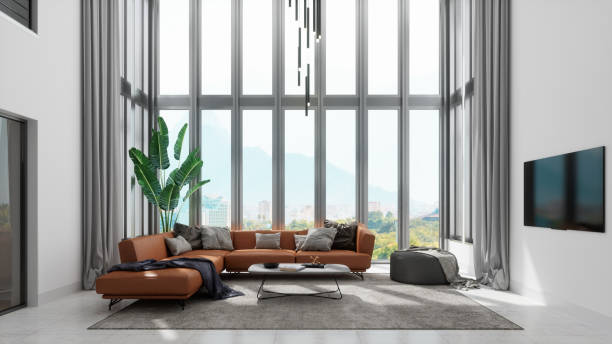
Residential and commercial buildings are designed with sufficient windows to establish a comprehensive daylighting system. Daylighting is the technique used to harness sunlight for its benefits. With this technique, you can reduce reliance on artificial lights and maximise energy savings. Daylighting can also have a positive effect on a person’s well-being.
Still, daylighting can produce negative results if the system is not executed correctly. For instance, incorrect placement and orientation of windows and skylights can admit not only natural light but also direct sunlight. These can also result in undesirable heat gains and unpleasant glare.
Fortunately, there are ways to optimise the amount of natural light entering your space—one of them is investing in window treatments.
What are Window Treatments?
Window treatments can be defined as a modification put over or around the windows to cover them completely or partially. These can be used for both decorative and functional purposes, including:
- enhance interior aesthetics
- control natural light and glare
- regulate temperature
- provide privacy
Moreover, window treatments come in a wide range of materials, designs, and styles, offering you the ability to customise your selection to match the specific needs and aesthetics of a room.
There are two main window treatment categories: window coverings and window tints.
Window Coverings
Window coverings are operable window treatments that allow you to either keep open or closed. You can keep the window coverings open to maximise natural light or take advantage of heat from the sun, particularly during the winter, and keep them closed for privacy or to reduce heat gain during summer.
You can have an array of selections if you want to invest in window coverings for your property. This type of window treatment is classified into three categories: hard window covering, soft window covering, and layered window treatment.
- Hard window coverings are made from rigid or solid materials.
- Soft window coverings are made from fabric or other textile materials.
- Layered window treatment involves using both hard and soft window coverings. This approach provides flexibility in controlling natural light, privacy, and décor.
Below are some examples of hard and soft window coverings:
Hard Window Coverings
Blinds – These are made of horizontal or vertical slats that can be adjusted to control sunlight and increase privacy. Blinds are typically made from wood, aluminium, vinyl, bamboo, and fabric. Subsequently, the most common types of blinds are Venetian blinds, pleated blinds, and vertical blinds.
Shutters – These are solid and stable window coverings installed into the window frame with hinges. These can be opened or closed to regulate light and airflow. Shutters typically consist of a frame of vertical or horizontal solid panels or louvres, which can also be fixed or adjusted to ensure maximum privacy, protection, and ventilation. Common materials used for shutters include wood, vinyl, aluminium, and other composite materials.
Soft Window Coverings
Curtains – These window coverings are typically lightweight and come in various fabric options, colours, and patterns. Curtains are often used for decorative purposes and can be easily pulled open or closed using a rod or track.
Drapes – Drapes are heavier and more formal than curtains. They are often lined and floor-length, offering better light control and insulation. Drapes available in the market come in a wide range of fabrics, styles, and designs, making them suitable for both traditional and contemporary interiors.
Shades – Window shades are versatile window coverings that can be raised or lowered to control light, privacy, and insulation in a room. While most shades are typically classified as soft window coverings, it is worth noting that certain varieties, such as cellular or honeycomb shades and woven wood shades, can be characterised as hard window treatments due to their partially rigid construction.
Valances – These window coverings cover only the top part of the window. Valances can be used alone or paired with curtains or blinds to add a decorative touch to the window frame.
Window Tints
Meanwhile, window tints are thin laminate films installed to the interior or exterior of windows and other glass surfaces to serve various purposes. Such include:
- enhance aesthetic appearance of the building’s exterior
- block UV radiation and solar heat
- reduce glare
- temperature control
- increase privacy
- minimise risks of windows shattering
- curtail fading and damage to furniture, fixtures, and other belongings
You can invest in window tinting London for your property to leverage daylighting and all the abovementioned benefits without blocking views.
How to Choose the Right Window Treatment?
Window coverings and window tints are great window treatments that enable you to maximise the benefits of daylighting and natural light. But, the right window treatment option will depend on your preferences, circumstances, and budget.
Window coverings may be the best option if you value aesthetics and design flexibility. Conversely, window tint films could be the better choice if you want to prioritise energy efficiency, UV protection, and low maintenance. Or, you can leverage both options to achieve both functional and decorative goals.
Where can you have window tints installed?
If you are looking for a reputable company that offers window tinting in Wrexham and other UK locations, you can always go to Global Tint UK.
At Global Tint UK, we provide our clients with the best tint films for your residential or commercial property. If you wish to have your window tints installed by our team, you can contact us at 0800-158-8005 or fill out our contact form.
READ MORE: